
Step by Step · Part 3/3
Walking on the Amalfi Coast: Carrying Your Own Weight
In Part 1, I wrote about my doubts. In Part 2, about how the path worked out anyway. What I'd underestimated back then: the real question wasn't during the climb — it came afterwards. Not “Can I get through today?” but “How do I get back on my feet tomorrow?”
Because on the Amalfi Coast, it wasn't just one day. It was several, back to back. The same steps every morning, the same elevation — and every day, the backpack on my back, roughly eight kilos, my own weight to carry. No one takes it off you. You carry it, or you don't go.
The Evening as Its Own Part of the Journey
On this trip, I learned to take the evening seriously. Not as whatever's left of the day, but as its own chapter — the part where the body processes what happened during the hours before.
My ritual was simple: shower, then work Deep Blue into the sore spots — it became as much an evening habit as a morning one — and before bed, Frankincense and the Copaiba softgels. Frankincense and copaiba are both plant extracts traditionally associated with calm and balance; what mattered to me was that they marked the evening. A clear line between day and night.
That's the psychologically useful part of an evening ritual: it sends a signal to the nervous system. This is it. No more planning, calculating, worrying. Anyone who skips that deliberate transition carries the day straight into bed with them — and wakes up more tired than they fell asleep. I see this often in my practice, with people struggling with poor sleep, and I knew it well enough from myself for long enough.
Recovery Isn't the Opposite of Effort
I used to think of recovery as something you do once you're done. A kind of afterthought. On the Amalfi Coast, it became clear to me: recovery is what makes the next day possible in the first place. Anyone who only thinks about the climbs and not about the nights in between is leaving out half of their strength.
That holds true well beyond hiking. In therapy, I often meet the belief that rest has to be earned — work first, and maybe rest afterwards, if there's time left. That equation rarely works out. Recovery isn't a reward for effort already given. It's the condition that makes any effort possible at all.
And Then, the Sorbet
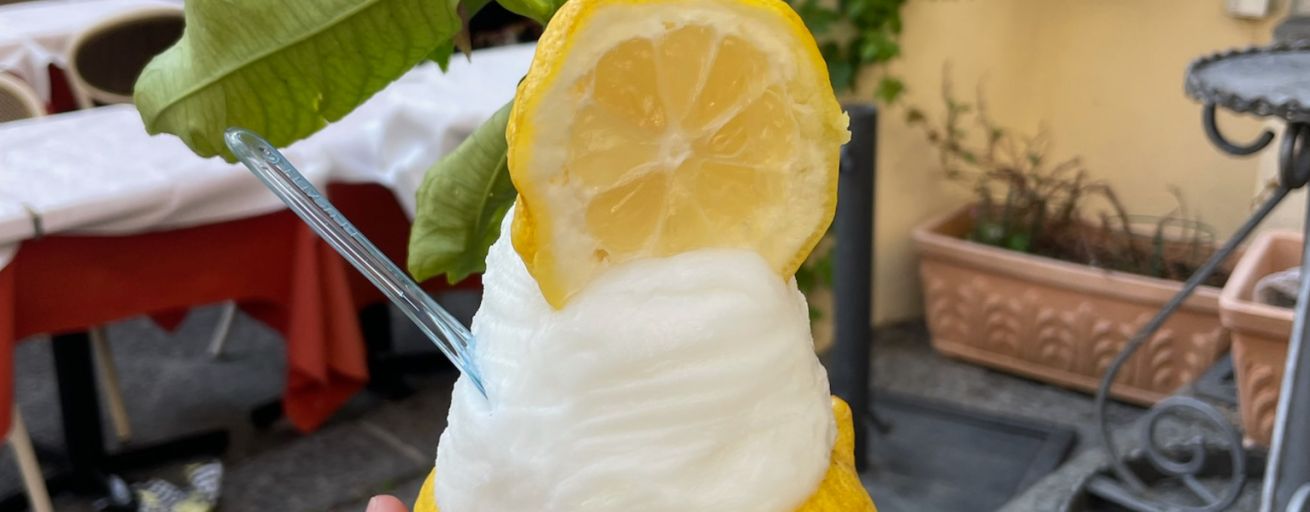
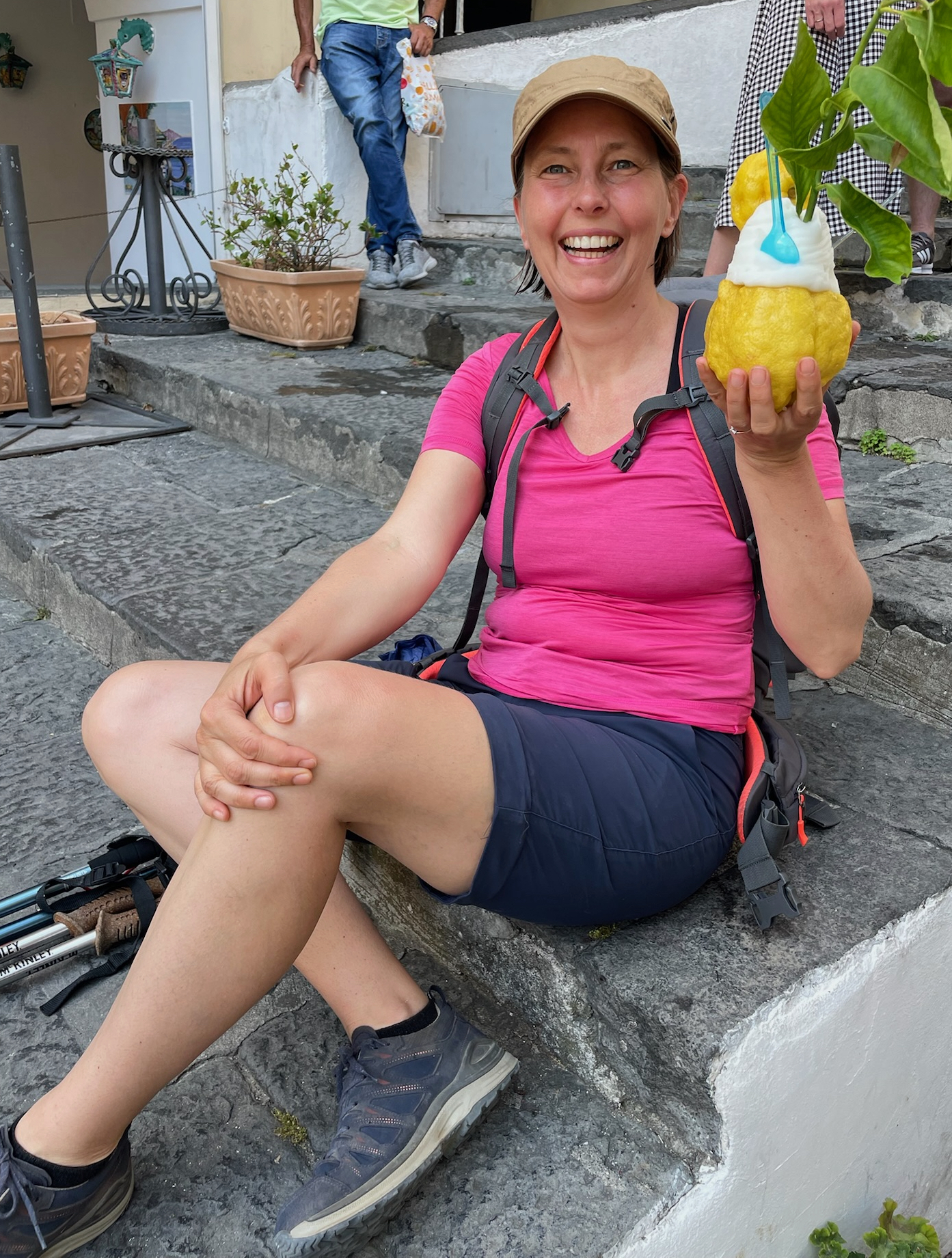
In Amalfi, there was lemon sorbet. Cold, sharp, wonderful after a long day in the sun. I could easily have framed it neatly: the well-earned reward for finishing the stage.
But this time, I deliberately didn't. The sorbet wasn't payment for anything. It was simply a good moment that happened to be there, and I took it. No tally, no justification, no quiet calculation in the background over whether I'd earned the right.
For someone who — as Part 1 makes clear — tends to put themselves under pressure, that's a small but meaningful exercise: enjoying something without accounting for it morally first.
What Remains
On the last day, I climbed the same steps as on the first, carrying the same backpack. What had changed wasn't the weight. It was my relationship to it.
We all carry our own weight — and most of the time, we can't set it down. What we can influence is how we carry it: at what pace, with which pauses, with how much care we look after ourselves in the evening. And whether we let ourselves stop along the way, when the lemons smell that good.
Your next step
Curious to experience it yourself? You can book a small group workshop — or start with a selection of oils at home and notice what changes for you.